- problem
- A small gym runs on phone calls, paper passes and the same questions at the front desk. Each fix usually arrives as a separate tool, and soon their prices and schedules disagree.
- built
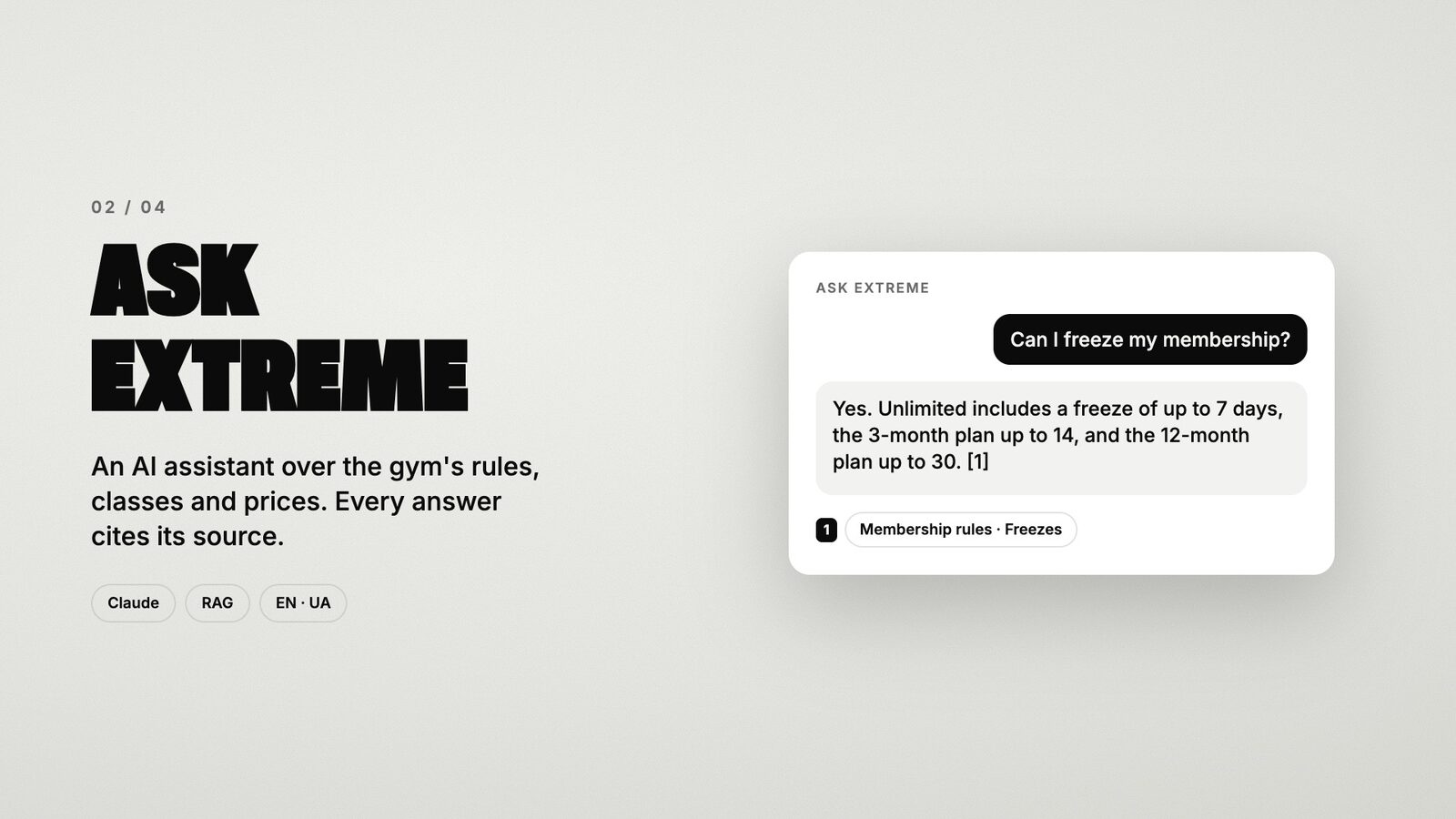
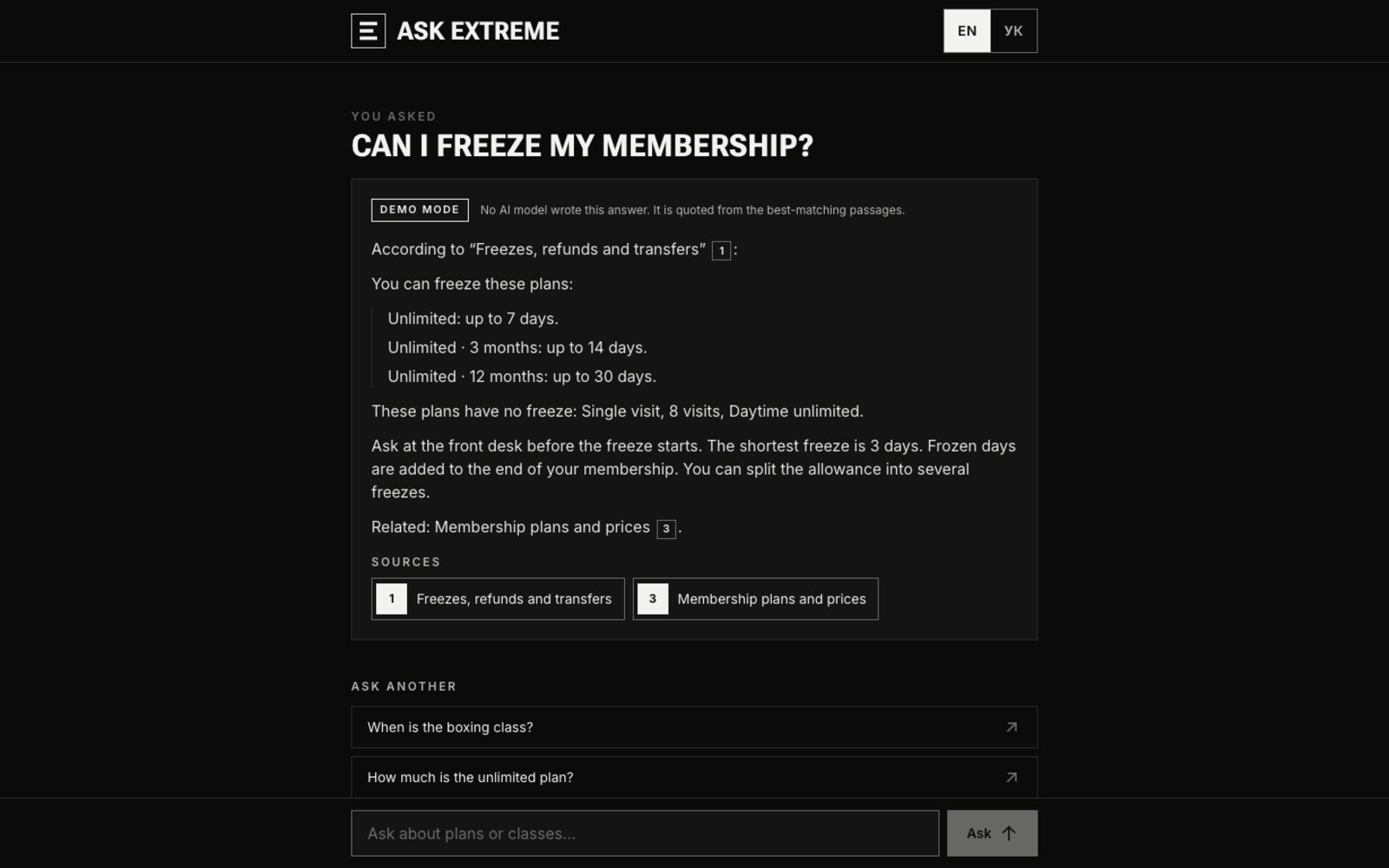
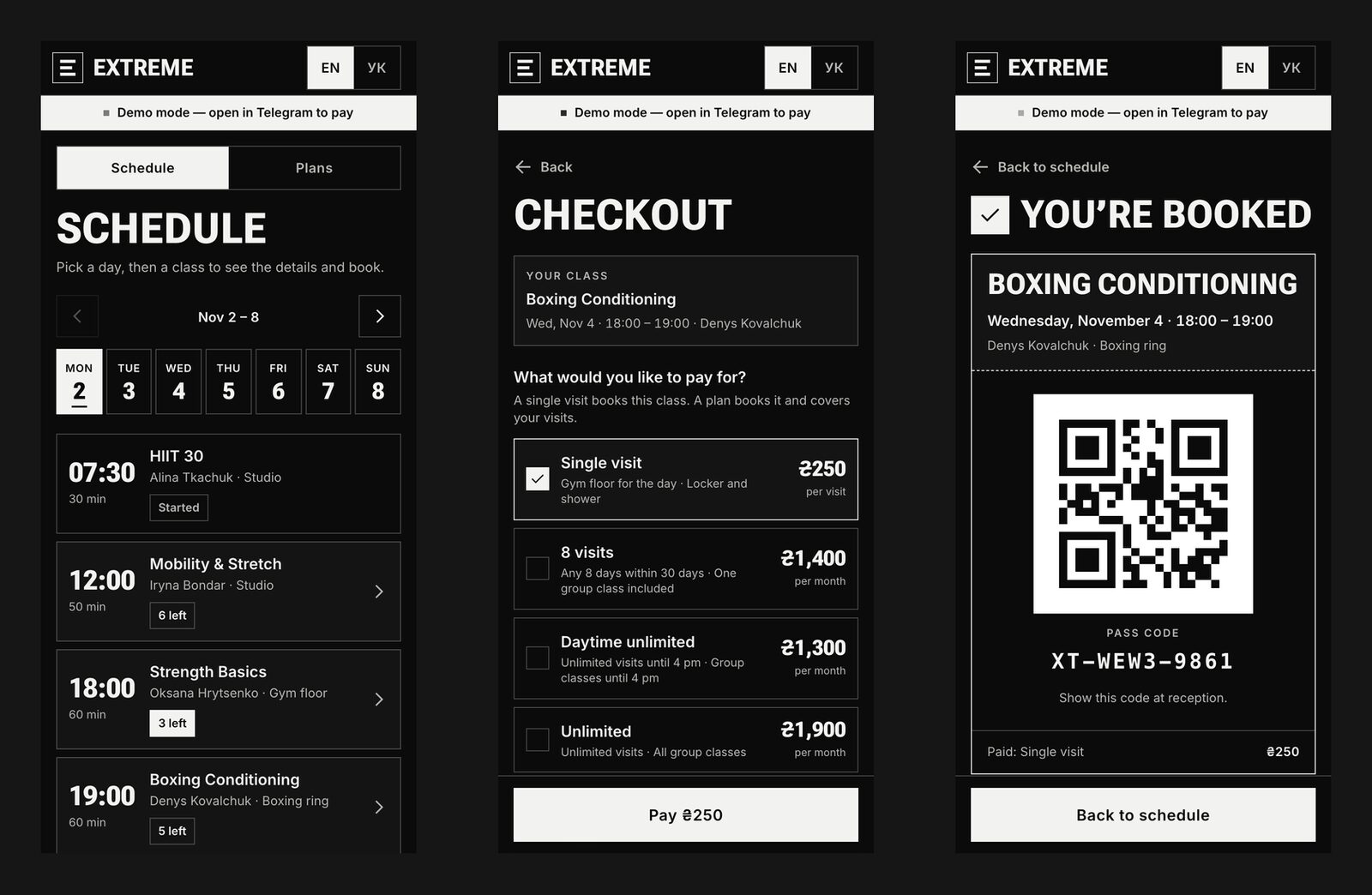
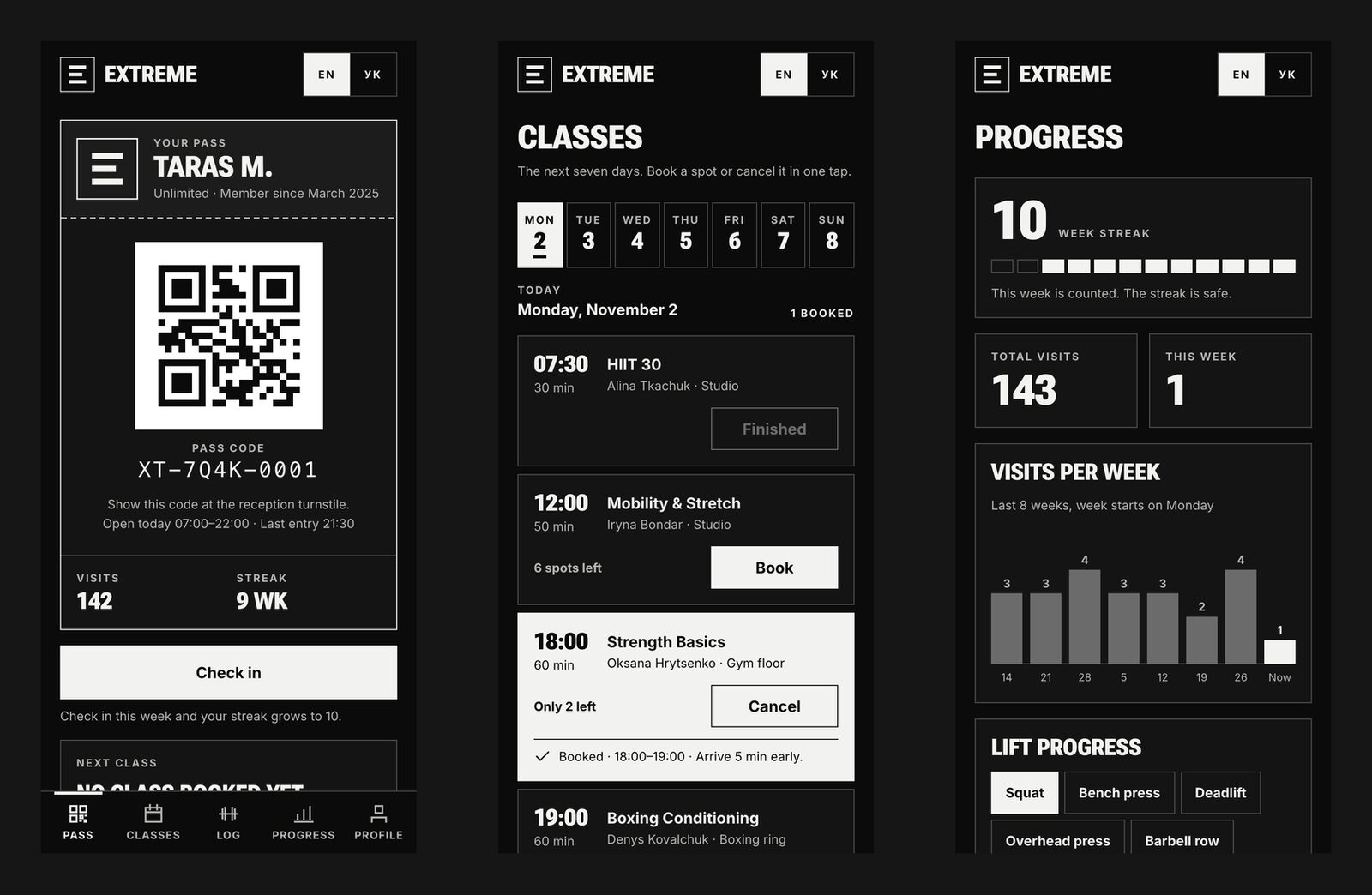
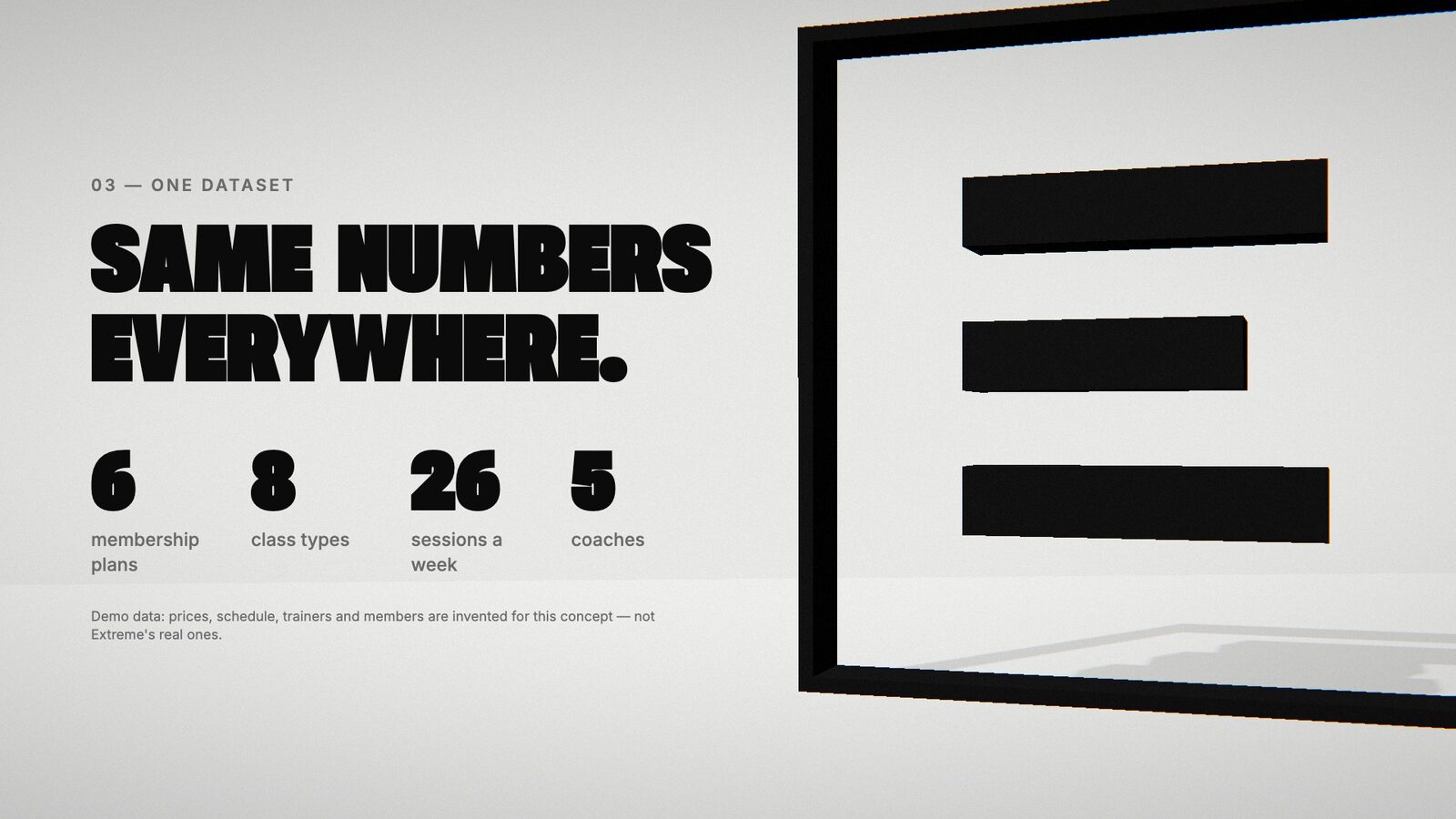
- One monorepo (Turborepo, pnpm) with a shared brand package — the gym’s mark vectorized and animated («Lift»: the bars rise like a heavy rep) — and one demo dataset of plans, classes, coaches and a weekly schedule that every app reads. The deck is ten slides in Remotion and three.js on a 120 BPM grid, with a voice-over, rendered to MP4 in English and Ukrainian and printed to PDF from the same source. The assistant answers from 15 documents per language — 9 of them generated from the dataset, so its prices cannot drift — with BM25 search and Claude Haiku citing numbered passages; without an API key it quotes the best passage instead. The Mini App books a class, validates Telegram’s initData with HMAC-SHA256 and takes a test-mode payment, after which a grammY bot sends the QR pass to the chat. The Expo member app carries the pass and check-in, bookings, a workout log with personal records and progress charts, and exports to the web. All four are concepts: the gym did not commission them, and every number is demo data.
- result
- 4products on one datasetEN · UAin every product1 sourcedeck → MP4 and PDF
Self-initiated concept — not commissioned by the companies it is about.